
As wellness consciousness and athletic fashion continue to merge, yoga and sports wear have evolved beyond mere functional clothing into a powerful expression of personal lifestyle and technological aesthetics. The design trends for 2026 will present a grand symphony of bio-inspiration, digital integration, and sensory experience. Here are the ten core trends, synthesized from global fashion week activewear lines, forward-looking releases from professional sports brands, and authoritative industry reports (such as WGSN and Sportswear International).
Trend 1: Edge Detailing (Exemplified by Wiskii’s Shell-Like Edging)
Core Characteristics: Inspired by the organic lines of marine life, featuring asymmetric, wavy, or layered 3D cutting and piping on sports bra cups, leg openings, and waistbands.
Design Analysis: Wiskii’s signature Shell-Like Edging moves away from the straight lines and lockstitches of traditional sportswear. Using laser-cutting or heat-press molding techniques, it creates soft, sculptural contours reminiscent of naturally curling seashells. This design not only imbues garments with an artistic, sculptural quality but also uses its three-dimensional structure to visually flatter the body’s lines.
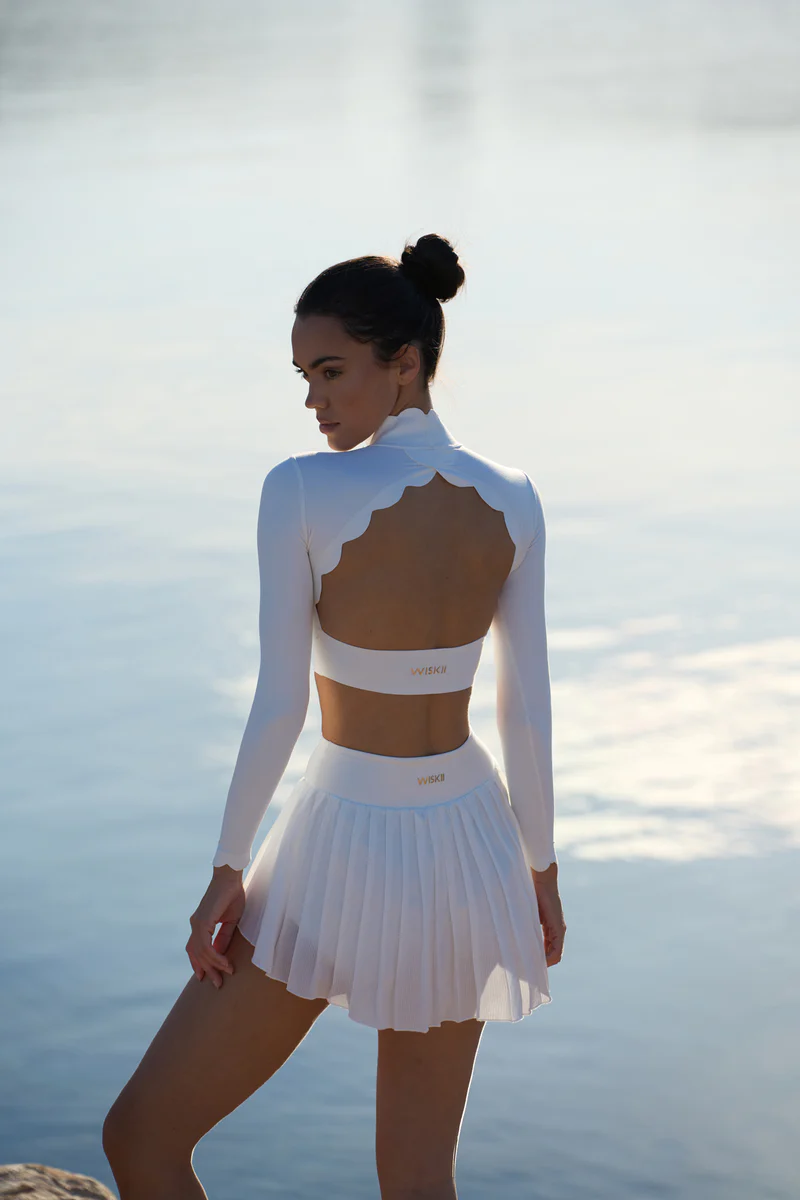
Materials & Craftsmanship: Often employs high-stretch, shape-memory nylon-Lycra blends to ensure complex edges maintain their form during movement. The process relies on high-precision laser cutting and seamless bonding technology.
Market Significance: Represents the rise of Athletic Luxury, catering to consumer demand for performance gear that also possesses museum-worthy design sensibility.
Trend 2: Next-Gen Fluid Flare Pants
Core Characteristics: A modern reinterpretation of the 70s flare, emphasizing a fluid, waterfall-like leg opening that begins at the knee, but crafted from high-performance technical fabrics.
Design Analysis: Unlike vintage versions, the 2026 flare focuses on functional proportioning. High-compression fabrics are typically used from the hips to thighs for support, transitioning into a graceful micro or macro flare from the knee down. Ideal for flowing yoga sequences and everyday wear, it creates a sense of dynamic elegance.
Key Detail: Subtle color-blocking stripes or reflective strips are often integrated along the sides to visually elongate the legs while enhancing safety for evening runs.
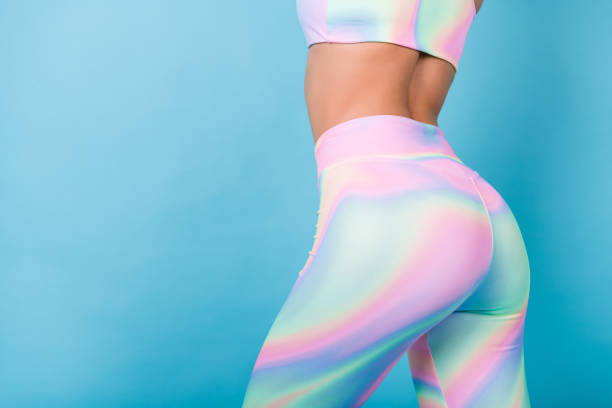
Trend 3: Digital-Native Colors: Virtual Fluorescents & Mineral Fades
Color Trends:
- Virtual Fluorescents: Fluorescent hues inspired by digital rendering effects, such as Krypton Green, Digital Lavender, Holographic Silver. These colors possess an “unreal,” luminous quality, often used for color-blocking or as a statement all-over color, offering high impact for social media and virtual fitness scenarios.
- Mineral Fades: Inspired by weathered rocks and crystals, like Faded Amber, Tundra Grey, Water-Eroded Stone Blue. These low-saturation colors with subtle textural references align with themes of sustainability and natural restoration, evoking a serene, healing visual feeling.
Trend 4: Plant-Based & Carbon-Capture Fabrics Go Mainstream
Fabric Revolution:
- Plant-Based Nylon & Polyester: Bio-based materials derived from castor oil, corn, or sugarcane now match or even surpass the performance of their petroleum-based counterparts, with a significantly reduced carbon footprint.
- Carbon-Capture Fabrics: Polyester fibers produced from captured industrial CO2 emissions, enabling “carbon-negative” production. These fabrics will become a core selling point for high-end sustainable activewear lines.
- Naturally Degradable Blends: Development of yoga mats and garments that can fully decompose in specific industrial composting environments, addressing microplastic pollution.
Trend 5: Adaptive Thermal & Haptic Feedback Fabrics
Smart Interaction:
- Phase Change Material (PCM) Microcapsules: Microcapsules embedded within the fabric absorb heat when the body overheats (creating a cooling sensation) and release it when cold, dynamically maintaining the thermal comfort zone.
- Haptic Feedback Zones: Gentle haptic feedback devices woven into areas like the sacrum or upper back of yoga pants. These can connect to meditation apps, using subtle vibrations to guide breathing rhythms or posture adjustments.
Trend 6: Modular & Convertible Design
Core Characteristics: A single garment can transform in style and function via zippers, snaps, or adjustable ties.
Specific Applications:
- Detachable Sleeves/Pant Legs: Long-sleeve tops convert instantly into tank tops; long pants become capris.
- Convertible Wrap-Skirt Pants: An outer layer of a flowing wrap skirt over inner tight shorts, facilitating a seamless transition from yoga studio to casual outing.
- Integrated Backpack: A sport jacket that can be folded and converted at the waist into a lightweight backpack, enhancing convenience for outdoor activities.
Trend 7: Inclusive Engineering & Fit
Design Philosophy: Moving beyond traditional XS-XL sizing to solution-based tailoring informed by vast anthropometric data from body scans.
Implementation:
- Bra Structures for Diverse Breast Morphology: Offering specific cup designs tailored for different breast shapes (e.g., hemispheric, side-set, athletic), rather than relying solely on size scaling.
- Multi-Variable Pants Sizing: Providing options for different thigh and hip measurements within the same waist size, ensuring a “made-to-measure” fit for a broader range of body types.
Trend 8: Opulent Performance: Functional Embellishment
Core Characteristics: Integrating decorative elements like rhinestones, metallic embroidery, and micro-beading with practical purposes.
Design Analysis: Embellishment is no longer just ornamental. For example, reflective rhinestones arranged in specific patterns enhance nighttime visibility; metallic embroidery following muscle lines provides subtle compression support while highlighting definition through light reflection.
Representative Context: Appeals to boutique fitness communities and for competition-day wear where high individual expression is sought.
Trend 9: Cross-Cultural Athletic Aesthetics
Inspiration Source: Drawing design inspiration from global traditional garments and integrating it into sportswear.
Specific Manifestations:
- Fundoshi-Inspired Shorts: Adapting the 3D structure and supportive wrap of the Japanese fundoshi into high-performance training shorts.
- Dhoti Pant Silhouettes: Blending the loose, comfortable drape of the Indian dhoti with sport leggings to create a new category of “draped joggers”.
- African Wax Print Patterns: Applying vibrant tribal patterns onto performance fabrics using advanced digital printing techniques.
Trend 10: Emotion-Sync Visualization Systems
Core Characteristics: Patterns or colors on the garment can change subtly based on the wearer’s heart rate, body temperature, or active choice, enabled by e-ink microcapsules or thermochromic dyes.
Technical Realization: For example, a flexible e-ink display integrated into the center of a sports bra can connect to a phone app to display custom motivational text, breathing rhythm patterns, or change color (from calm blue to intense red) in response to heart rate.
User Experience: Transforms sportswear into a dynamic canvas for personal emotion and physiological state, significantly enhancing the ritualistic and immersive experience of movement.
Conclusion: The Three Core Drivers of 2026 Trends
- Full-Spectrum Sensory Design: Design is expanding beyond sight and touch to encompass thermal management (adaptive temperature), dynamic visuals (color-change), and even auditory (silent fabrics) and emotional connection (emotion visualization), offering a holistic sensory experience.
- Precision Responsibility: Sustainability is evolving from the generalized concept of using recycled materials to precise accountability across the entire product lifecycle—from material sourcing (plant-based) and production processes (carbon-capture) to product end-of-life (biodegradability).
- Deep Identity Expression: Clothing is becoming a profound tool for expressing personal values (eco-choices), cultural identity (fusion aesthetics), physical uniqueness (inclusive fit), and digital persona (virtual compatibility).
For brands and manufacturers, competition in 2026 will no longer be confined to fabric functionality and cost control. It will increasingly hinge on the ability to translate these cutting-edge trends into scalable, emotionally resonant physical products. Pioneering the integration of biodesign, smart materials, and inclusive engineering will be key to building the moat for the next generation of athletic wear brands. Contact Uga to start your 2026 new projects.
